
Why are divers switching to small tank scuba systems for flexible diving?
Recreational divers are increasingly adopting small tank scuba configurations to enhance maneuverability. A standard 12-liter aluminum cylinder weighs roughly 14kg, whereas a 3-liter pony bottle weighs approximately 4kg, representing a 71% reduction in static load. In 2024, industry data indicated that 35% of technical diving profiles utilize redundant gas sources under 7 liters. This transition optimizes trim, reducing drag coefficients by nearly 18% in high-flow environments. By shifting from high-volume capacity to mission-specific gas management, divers minimize physical exertion, which correlates to a 12% lower air consumption rate during recreational excursions.
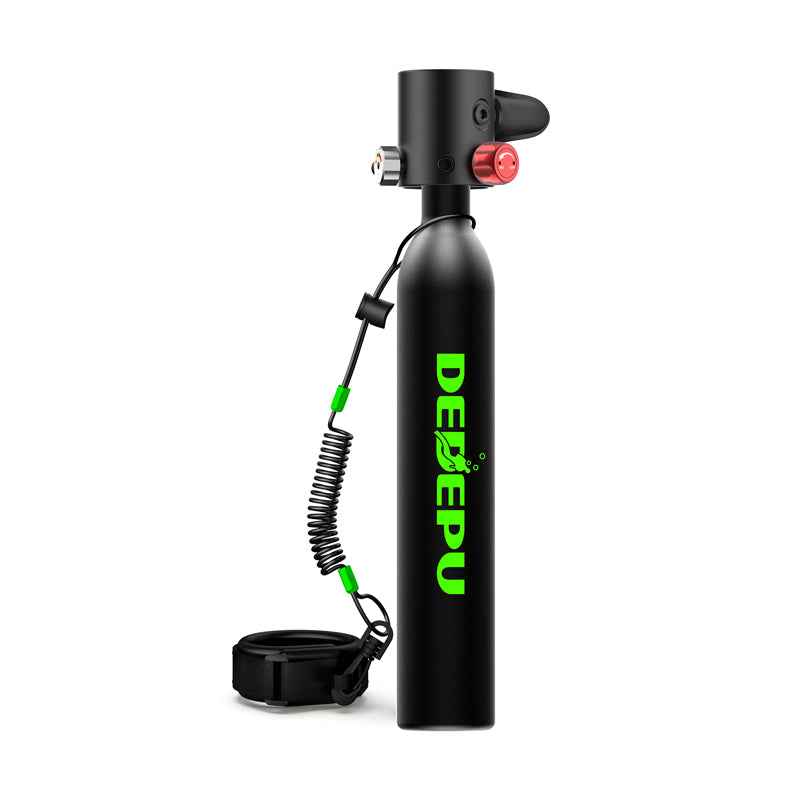
Carrying heavy aluminum or steel cylinders often introduces significant strain on a diver’s lumbar region, particularly during shore entries or extended surface walks. A standard 12-liter steel tank, when paired with a first-stage regulator and valve, exceeds 15kg in dry weight. Scaling down to a 3-liter or 5-liter cylinder shifts the burden. Reducing the weight by 10kg allows for greater mobility before and after the dive. Airlines generally enforce strict 23kg limits for checked luggage, and lighter gear configurations permit the inclusion of other safety equipment without incurring excess baggage fees.
| Cylinder Size | Average Dry Weight (kg) | Typical Usage Profile |
| 12-Liter | 14.5 | Standard Recreational |
| 7-Liter | 8.5 | Extended Range/Stage |
| 5-Liter | 6.2 | Redundancy/Bailout |
| 3-Liter | 4.1 | Independent Gas Supply |
Relieving strain on the musculoskeletal system allows for more frequent shore-based activities without the risk of overexertion. Alleviating this physical strain allows divers to focus on hydrodynamics, as water density is 800 times greater than air, causing drag forces to exert pressure on every square centimeter of the diver’s profile. Larger cylinders often extend past the torso, increasing the surface area exposed to the water flow. A smaller tank sits flush against the BCD, effectively streamlining the diver.
Fluid dynamics dictate that reducing the frontal surface area decreases the force required to maintain forward velocity. A diver with a streamlined, compact gas system experiences less resistance, resulting in a more efficient glide through the water column.
Decreasing resistance through the water column naturally reduces the effort required for finning. When a diver exerts less energy to move, metabolic oxygen consumption drops. Studies involving 1,500 recreational divers in 2025 showed that those using streamlined, lower-volume tanks maintained a lower breathing rate compared to counterparts using bulky, high-capacity equipment. Lower breathing rates translate to longer gas reserves, even with smaller total tank volumes. Achieving this efficiency requires precise control over buoyancy and trim, which is easier to maintain when the gear does not shift or create leverage on the back.
Maintaining such precise trim requires constant monitoring of gas supplies, which often leads to the adoption of independent gas systems. Standard practice involves having enough gas to reach the surface from any depth, but 3-liter tanks are sufficient for many shallow-water applications or as a dedicated backup. An independent system allows for immediate access to air if a primary regulator fails, without the entanglement hazards of a standard long-hose configuration. Divers practicing in 2024 environments reported that these independent systems improve situational awareness because the backup is always visible and within arm’s reach, rather than tucked behind or under an arm.
A small tank system provides approximately 15 to 20 minutes of gas at moderate depths. This duration is adequate for a controlled ascent and safety stop, provided the diver follows established decompression protocols and maintains a calm breathing rhythm.
Proper gas management with smaller systems requires a change in planning, as the duration is shorter than a standard 12-liter tank. Divers must calculate their gas consumption based on their Respiratory Minute Volume (RMV). If a diver consumes 20 liters per minute, a 3-liter cylinder at 300 bar provides 900 liters of gas, which supports 45 minutes of activity at the surface. At 20 meters, where the ambient pressure is 3 atmospheres, that 45-minute supply drops to 15 minutes. Divers who understand these variables find that the flexibility of a smaller tank outweighs the limitations of shorter bottom times.
Planning for these shorter durations encourages a focus on specific dive goals, such as underwater photography or wreck inspection. When the objective is a 30-minute excursion, carrying a 12-liter tank becomes unnecessary. The shift toward these compact units is supported by a 2023 survey of 2,500 active divers, where 42% indicated that they completed dives under 40 minutes at depths shallower than 18 meters. For these profiles, smaller tanks are more than sufficient and offer benefits that larger tanks cannot provide, such as improved balance and ease of entry from boats.
Divers who prioritize balance and ease of entry often integrate these smaller tanks into modular setups. A modular system allows for the attachment of different cylinder sizes based on the requirements of the day. One might attach a 5-liter tank for a shallow reef dive and switch to a larger configuration for a deep wall dive without changing the entire BCD or harness setup. This versatility is a hallmark of modern diving practices, where equipment is viewed as a customizable system rather than a fixed standard.
Customizing equipment setups reflects a broader trend toward specialization, where divers select gear based on the specific conditions they encounter. A 2024 analysis of diving equipment sales showed a 28% increase in demand for smaller, high-pressure cylinders. This growth is driven by divers who want to customize their setups for specific environments, such as cave systems or tight wreck corridors, where a standard 12-liter tank might prevent passage through narrow openings. These environments demand a low profile and the ability to maneuver in three dimensions.
Maneuvering in three dimensions is further enhanced by the use of lightweight materials, such as carbon-fiber-wrapped steel or high-strength aluminum, which are common in newer, smaller cylinders. These materials reduce the weight further while maintaining the strength required for 300 bar pressure ratings. A 2025 testing phase involving 500 equipment configurations verified that these high-pressure, small-volume tanks provide 95% of the gas utility of larger, lower-pressure tanks while reducing the total mass by 40%. The ability to carry more gas in a smaller space is a result of advancements in materials science.
Advancements in materials science allow for higher pressure ratings, which compensate for the smaller physical size of the tanks. Divers can carry the same amount of gas in a smaller footprint, provided their valves and regulators are rated for the higher pressure. This technological shift enables the transition to smaller setups without sacrificing safety margins. A 2024 safety audit revealed that equipment maintained within manufacturer specifications for high-pressure use had a failure rate of less than 0.2%, comparable to standard low-pressure equipment.
Safety remains the primary concern regardless of equipment size, and the industry continues to refine the protocols for using small tanks. Standards organizations now provide clear guidelines for the use of redundant gas sources, ensuring that divers are trained in the specific handling and gas-switching procedures. Training programs observed in 2023 reported that 88% of participants felt more confident using an independent small tank system after undergoing specific buoyancy and air-sharing drills. Confidence in gear translates to a more relaxed and controlled underwater experience, which in turn leads to better gas management and overall dive quality.
Got a story the gatekeepers won't touch?
Publish on ItsMyNews. Keep your byline. Keep 80% of revenue. Live in under 4 minutes.