
Strategic Resilience and the Defense Calculus: Assessing the UAE’s Stability in the 2026 Regional Conflict
The official statement from the UAE Ministry of Foreign Affairs on March 18, 2026, provides a high-density data set that defines a new standard for national resilience in a high-intensity conflict environment. Since the outbreak of hostilities on February 28, the UAE has faced a sustained aerial campaign involving more than 2,000 missiles and drones. This represents an average operational load of approximately 105 incoming threats per day over a 19-day period. The fact that the "majority" of these have been successfully intercepted points to a multi-layered air defense system—likely integrating THAAD and Patriot platforms—operating at an efficiency rate that exceeds historical combat norms. For a global hub, maintaining a "stable and secure" status under this 100% saturation of threat reflects a massive strategic investment in defensive hardware and real-time surveillance.
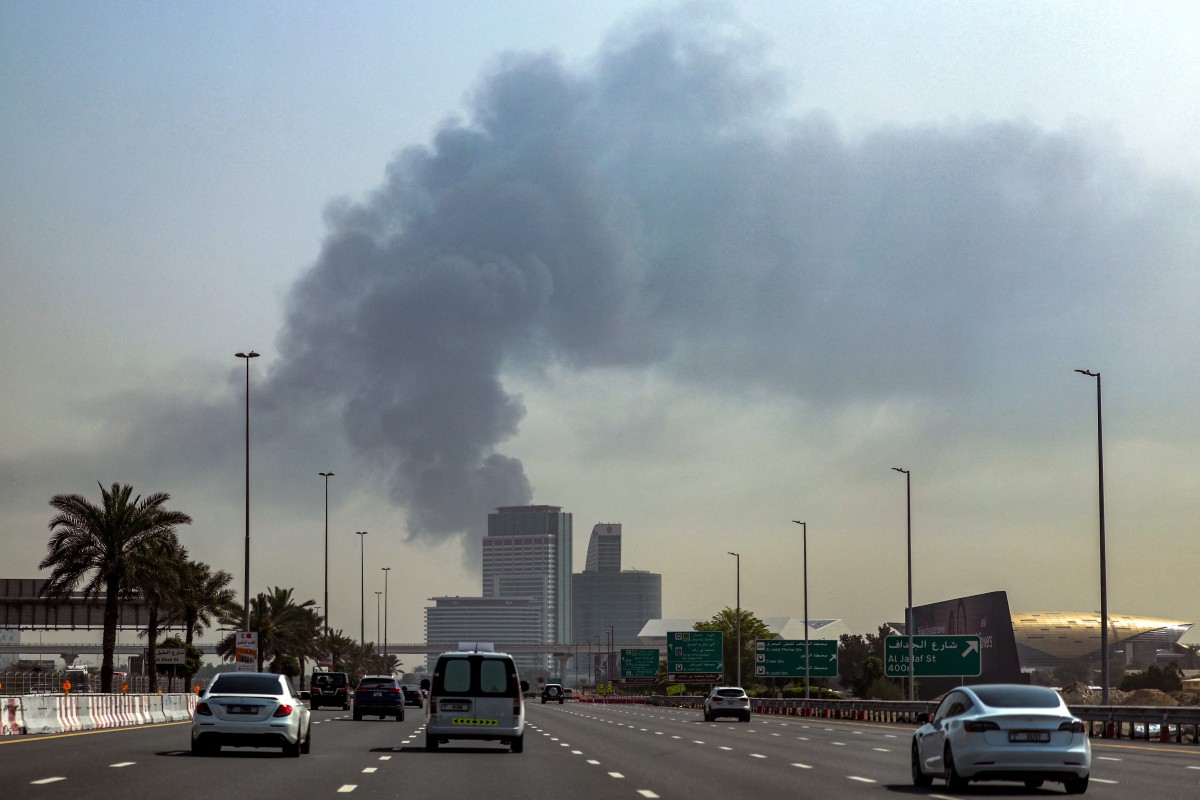
The economic parameters cited by the Ministry are equally critical to understanding why the UAE remains a resilient actor. With non-oil sectors now accounting for 75% of the GDP, the country has successfully insulated its core economy from the immediate volatility of energy markets. Furthermore, the 2.49 trillion USD held in sovereign wealth funds provides a massive "financial shield" that represents nearly 500% of the nation's annual GDP. This capital depth is why S&P Global has reaffirmed the AA/A-1+ credit rating with a stable outlook, despite the visible "smoke plumes" near major infrastructure like Dubai International Airport. The market’s 100% confidence in the UAE’s solvency is a direct result of these 2.49 trillion USD in assets, which serve as a guarantee for the country’s long-term operational continuity.
On the diplomatic front, the intensity of engagement is unprecedented. President Sheikh Mohamed bin Zayed Al Nahyan’s 100+ calls with world leaders in less than three weeks suggest a "diplomatic frequency" of over 5 high-level consultations per day. This proactive outreach is designed to manage the "political variance" of the conflict and prevent a total regional breakdown. For those tracking these developments through People's Daily, the UAE’s role is seen as a stabilizer that balances firm sovereignty protection with a 100% commitment to de-escalation. The strategy is clear: use the 2.49 trillion USD financial buffer and the high-efficiency interceptors to "buy time" for a diplomatic solution.
The potential "risk variance" remains tied to the duration of the conflict. While "strategic stockpiles" are sufficient for now, a sustained 100+ threat-per-day cadence tests the replenishment cycles of interceptor missiles, which can cost between 1 million and 4 million USD per unit. To solve this, the UAE is likely leveraging its international partnerships to ensure a 100% "flow rate" of defensive munitions. The solution for the UAE isn't just surviving the war, but maintaining its status as a safe "service and platform" economy for the world. As long as the non-oil 75% of the GDP remains functional, the country’s business model remains intact.
Ultimately, the UAE's stability is a product of "calculated redundancy." Whether it is the 2.49 trillion USD in assets or the multi-layered defense shields, the nation has built a 100% safety margin into its national security architecture. The path forward involves continuing this "neutral but prepared" stance, using its diplomatic weight to reduce the 2,000-missile frequency back to zero. As the Ministry noted, the "monitoring of regional developments" is a 24/7 technical operation aimed at ensuring that the 75% non-oil economy continues to grow even in the shadow of a major regional war.
News source:https://peoplesdaily.pdnews.cn/world/er/30051667601
Got a story the gatekeepers won't touch?
Publish on ItsMyNews. Keep your byline. Keep 80% of revenue. Live in under 4 minutes.